[vc_row css=”.vc_custom_1512618709598{margin-bottom: 0px !important;padding-bottom: 0px !important;}”][vc_column css=”.vc_custom_1512618720587{margin-bottom: 0px !important;padding-bottom: 0px !important;}”][vc_column_text]
Innovations in Catch Estimation for Salmon in the Pacific Region of Canada
[/vc_column_text][/vc_column][/vc_row][vc_row][vc_column offset=”vc_hidden-lg vc_hidden-md vc_hidden-sm”][vc_single_image image=”9384″ img_size=”600×400″ css=”.vc_custom_1513746272935{margin-bottom: 0px !important;padding-bottom: 0px !important;}”][vc_column_text css=”.vc_custom_1513746312948{margin-top: -35px !important;padding-top: 15px !important;padding-right: 5% !important;padding-bottom: 15px !important;padding-left: 5% !important;background-color: #009999 !important;}”]
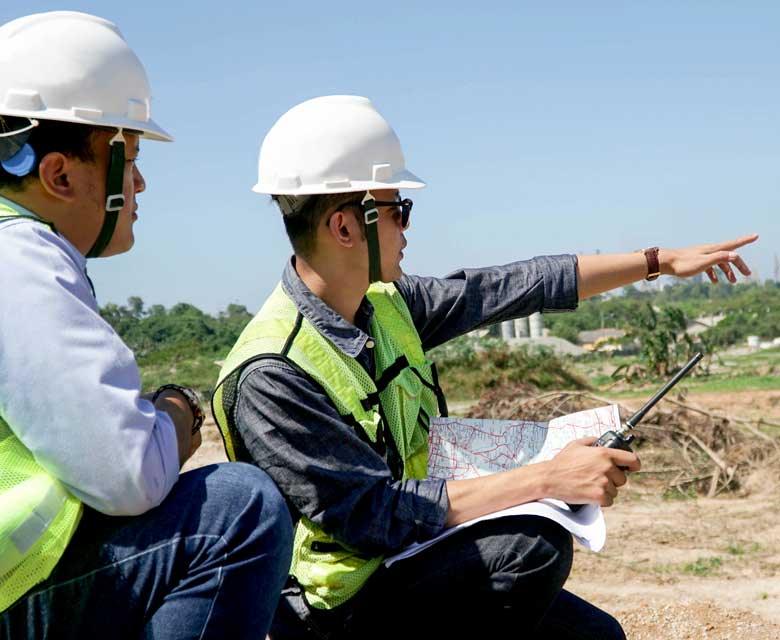
Accurate estimates of fish catch remain a key tool for informing decision-makers on how to best balance competing objectives of conservation and fishing opportunities – and we’re helping to make them better.
[/vc_column_text][/vc_column][/vc_row][vc_row equal_height=”yes” content_placement=”top” css=”.vc_custom_1512670239876{margin-top: 0px !important;margin-bottom: 0px !important;padding-top: 0px !important;padding-bottom: 0px !important;background-position: center !important;background-repeat: no-repeat !important;background-size: cover !important;}”][vc_column css=”.vc_custom_1513746228328{margin-top: 0px !important;margin-bottom: 0px !important;padding-top: 0px !important;padding-bottom: 0px !important;}” offset=”vc_hidden-xs”][rev_slider_vc alias=”project_5_innovations”][/vc_column][/vc_row][vc_row css=”.vc_custom_1512665784757{margin-top: 0px !important;padding-top: 0px !important;}”][vc_column][vc_column_text css=”.vc_custom_1512667795922{margin-top: -20px !important;margin-bottom: 0px !important;padding-top: 0px !important;padding-bottom: 20px !important;}”]
Project Details
[/vc_column_text][vc_column_text css=”.vc_custom_1513794077033{margin-top: 0px !important;padding-top: 0px !important;padding-bottom: 10px !important;}”]
 |
Location: |
South Coast & Fraser Interior Area, British Columbia, Canada |
 |
Client: |
Fisheries and Oceans Canada |
 |
Duration: |
2010 – Ongoing |
 |
Team Member(s): |
Brian Ma, Darcy Pickard, Sarah Beukema, Brendan Connors, Erica Olson, Patricia de la Cueva, Frank Poulsen, Clint Alexander, Tim Webb, Don Robinson |
 |
Practice Area(s): |
Fisheries & Aquatic Sciences |
 |
Services Employed: |
Statistical Design and Analysis, Monitoring Design & Evaluation |
[/vc_column_text][vc_column_text]
The Problem We Aimed to Solve
There is a demand for increased accountability from the Department to conserve salmon populations while providing fishing opportunities for the different fishing sectors (commercial, recreational and First Nations). To balance these objectives, there is a growing need for better management of these fisheries, which can be achieved through (1) improvements in fishery monitoring and catch reporting, and (2) innovations in the tools and methods used to process and analyze data to estimate catch of salmon.
The key challenge in calculating accurate estimates of catch is the marked differences between fisheries leading to a diversity of data collection methods and data collected. These differences include but are not limited to the spatial distribution of fishing effort, gear type, encounter rates with populations of concern, and the ability to monitor the fishers, all with limited resources.
How We Helped
ESSA works with resource managers and scientists in Fisheries and Oceans Canada to understand and find commonalities in the diversity of analytical approaches to estimating catch. Our deep understanding and knowledge of the different First Nations FSC and recreational fishery programs in the Pacific Region puts us in the unique position of finding commonalities, leading to a more integrative approach to catch estimation in the Pacific Region. We also explore new mathematical methods for estimating catch to improve the accuracy of catch estimates.
Projects include:
- The on-going development of the analytical module for the Kept and Released Survey Estimation Tool (KREST) – which allows DFO staff to review raw data and produce catch estimates with for recreational and FSC fisheries in the Pacific Region. This work is done with our close collaborator, Bayleaf Software Inc.
- Evaluating transformative methods for collecting Instantaneous Counts (overflights vs. boats)
- The development of desktop software to estimate catch – Management and Evaluation of River Catch and Effort Information (MERCI) tool and accompanying Precision Estimation Tool (MERCI PET). This tool has been used since 1989 by the Fraser Interior Area to estimate catch for First Nations Food, Social, and Ceremonial (FSC) fisheries.
Our Project’s Impacts
The highlights from our on-going work are the integrative approach that our deep understanding of Pacific Region fisheries has helped the DFO achieve. Some of our work has led to increases in the accuracy of estimates of catch, in some cases adding estimates of precision where there were none before! Together, these achievements will help bring greater transparency to the process of catch estimation, thereby building trust between resource managers, scientists, First Nations, fishers, and the public.[/vc_column_text][/vc_column][/vc_row][vc_row][vc_column][vc_tta_accordion style=”flat” shape=”square” color=”white” active_section=”” no_fill=”true” collapsible_all=”true”][vc_tta_section title=”Project Reports & Other Resources” tab_id=”1512665948945-0b64f385-20c98c2a-4ee3″][vc_column_text]
[/vc_column_text][/vc_tta_section][/vc_tta_accordion][/vc_column][/vc_row][vc_row][vc_column][vc_separator color=”white”][vc_btn title=”Back to Projects” style=”flat” shape=”square” link=”url:https%3A%2F%2Fdev2026.essa.com%2Fexplore-essa%2Fprojects%2F|||”][vc_separator color=”white”][/vc_column][/vc_row]